
Technical CenterTECHNICAL-CENTER
Featured products
Contact Us
Why Is Cellulose Ether Essential in Dry Mix Mortar?
2026-06-27
Although **cellulose ether** represents only a tiny fraction of a mortar formulation, it plays a decisive role in determining workability, water retention, bonding performance, and long-term durability. Without cellulose ether, modern dry mix mortar simply cannot achieve the quality required for today’s construction standards.
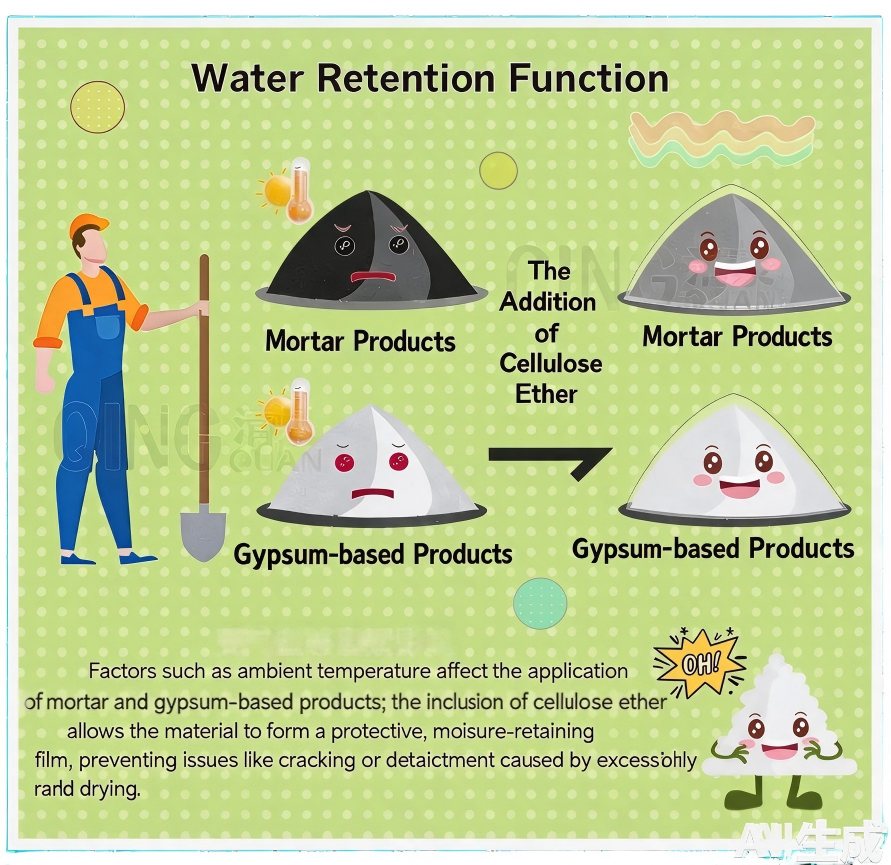
1. Excellent Workability: Making Mortar Easy to Apply
The first thing contractors notice is how the mortar feels during application.
Mortar without cellulose ether often exhibits poor consistency. It may become:
* Too sticky, causing mortar to cling to the trowel.
* Too stiff, making spreading difficult.
* Difficult to level, increasing labor intensity.
* Prone to sagging or uneven application.
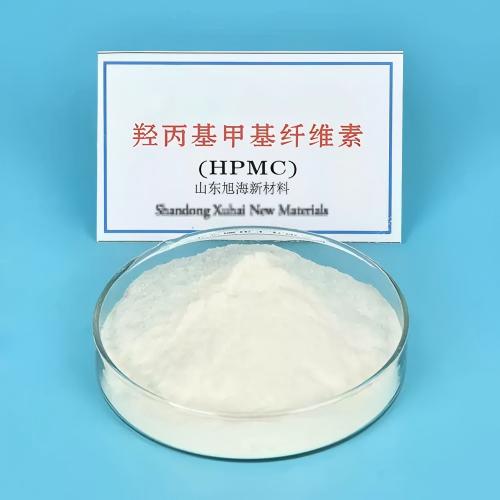
By adding the appropriate amount of **HPMC (Hydroxypropyl Methyl Cellulose)** or **HEMC (Hydroxyethyl Methyl Cellulose)**, the mortar develops excellent rheological properties. The material spreads smoothly, maintains consistent texture, and allows workers to achieve a uniform finish with less physical effort.
The result is:
* Better trowelability
* Improved slip resistance
* Easier finishing
* Higher construction efficiency
* Reduced material waste
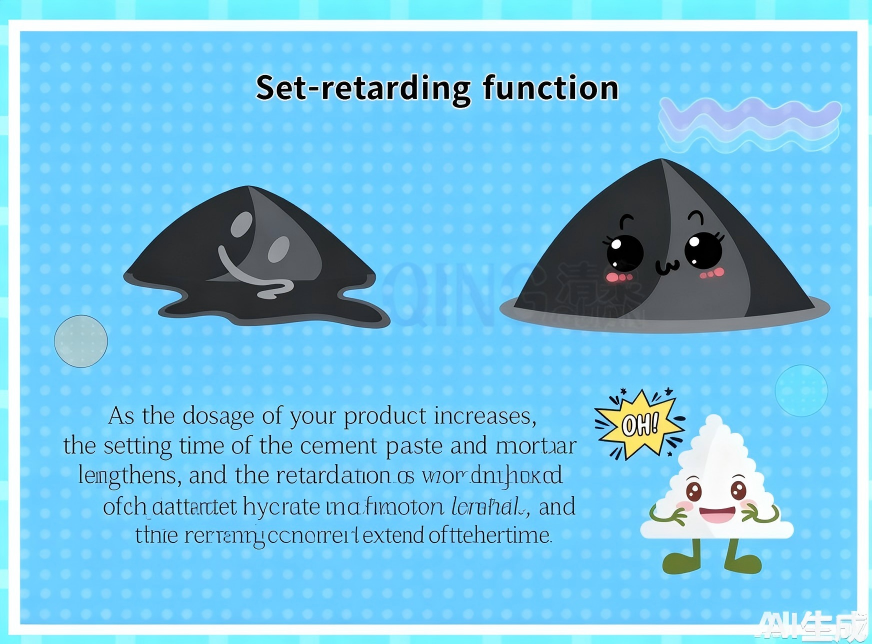
2. Superior Water Retention: The Key to Cement Hydration
Cement gains strength only through proper hydration, and hydration requires sufficient moisture.
Fresh mortar applied to bricks, concrete blocks, or highly absorbent substrates quickly loses water through:
* Absorption by the substrate
* Surface evaporation
* Wind and high-temperature exposure
Without adequate water retention, cement hydration is interrupted, leading to:
* Powdering
* Surface cracking
* Weak bonding
* Hollowing
* Reduced compressive strength
* Poor long-term durability
Cellulose ether acts as a microscopic water-retention system. It absorbs water and releases it gradually throughout the hydration process, ensuring that cement particles have sufficient moisture to react completely.
This controlled release significantly improves the final mechanical properties of the hardened mortar.
3. Improved Cohesion and Anti-Segregation
Cellulose ether also increases the viscosity and cohesion of fresh mortar.
This prevents common problems such as:
* Aggregate separation
* Water bleeding
* Material slumping
* Poor adhesion to vertical surfaces
The mortar remains homogeneous throughout mixing, transportation, and application, producing a more stable and reliable construction material.
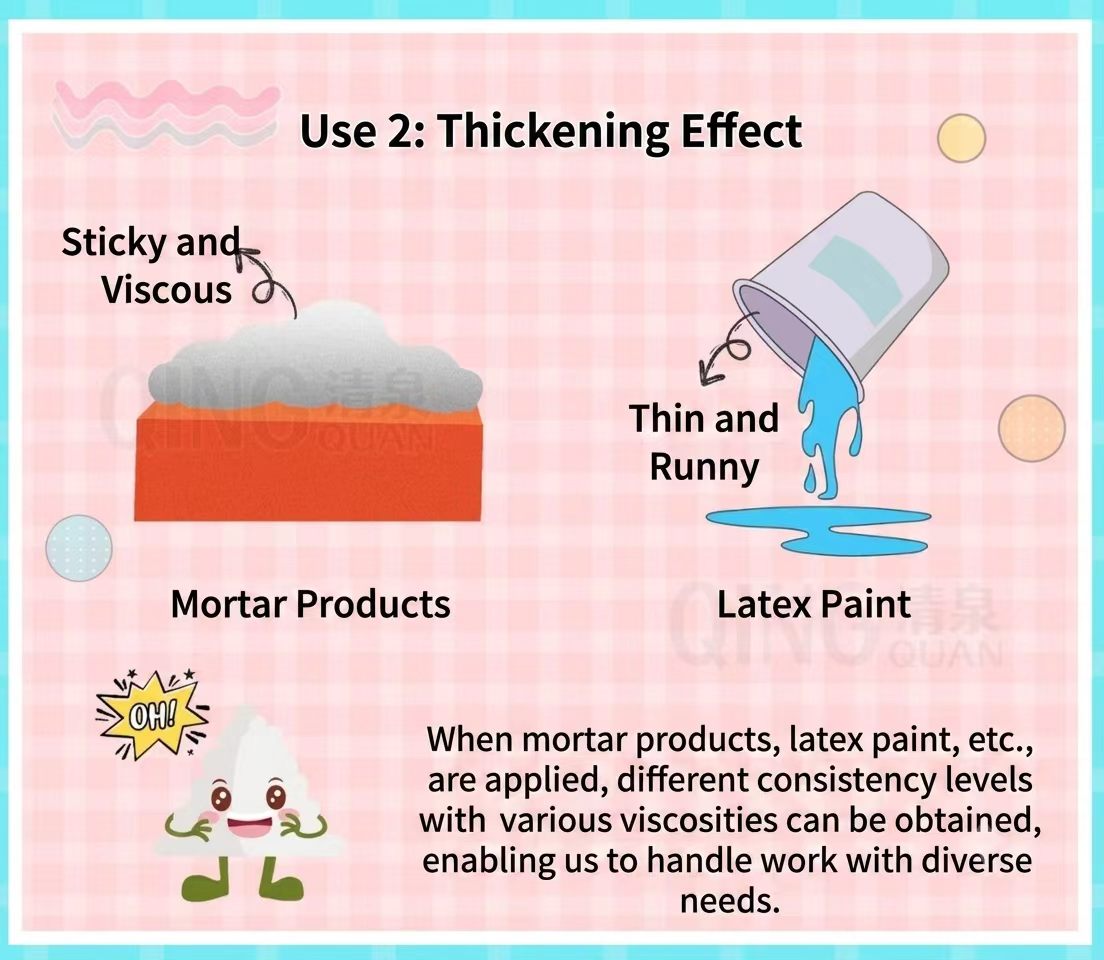 4. Better Lubrication for Smooth Application
Besides thickening the mortar, cellulose ether provides excellent lubrication between solid particles.
This improves:
* Pumpability
* Sprayability
* Troweling performance
* Surface smoothness
* Finishing quality
Workers can spread the mortar more evenly while maintaining consistent thickness across the application surface.
5. Enhanced Bond Strength
Modern tile adhesives, plastering mortars, skim coats, EIFS systems, self-leveling compounds, and repair mortars all require excellent adhesion.
Cellulose ether helps maintain intimate contact between mortar and substrate during the critical early curing period, significantly improving bond strength and reducing the risk of debonding or peeling.
AConclusion
lthough cellulose ether is added at only 0.2–0.6% of a typical dry mix mortar formulation, its influence on mortar performance is enormous.
Without cellulose ether, mortar becomes difficult to apply, loses moisture too quickly, develops insufficient strength, and is more likely to crack, powder, or fail prematurely.
With cellulose ether, mortar becomes smooth, workable, cohesive, water-retentive, and durable—meeting the performance demands of modern construction.
In short, cellulose ether may be invisible inside the mortar, but it is one of the most important additives in dry mix mortar technology. It is the ingredient that transforms a mixture of cement and sand into a high-performance construction material capable of delivering reliable strength, excellent workability, and long-lasting durability.