
Technical CenterTECHNICAL-CENTER
Featured products
Contact Us
What Are the Advantages of Polycarboxylate Superplasticizer? Why Is It Added to Dry Mix Mortar?
2026-06-27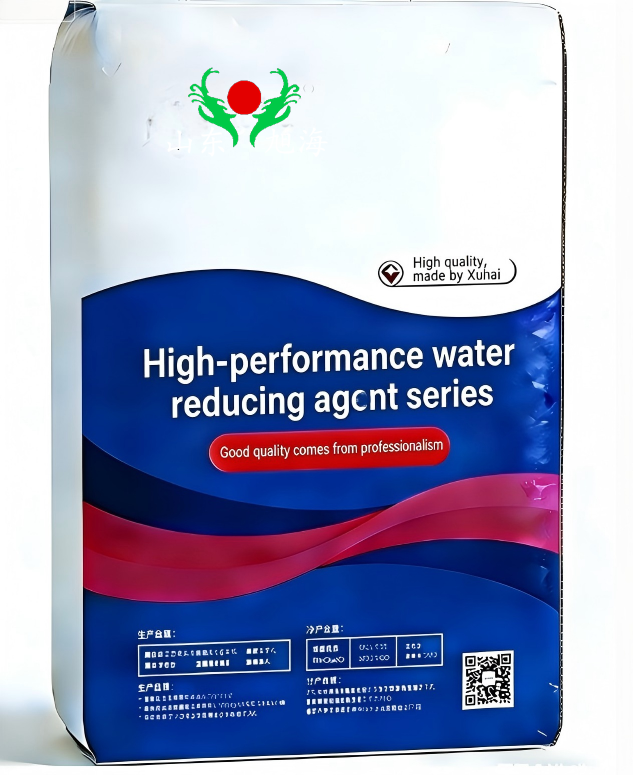
Whether used in tile adhesives, self-leveling mortars, repair mortars, grouts, gypsum products, or high-performance cement-based materials, polycarboxylate superplasticizers help manufacturers produce mortars with superior performance and greater consistency.
A Polycarboxylate Superplasticizer (PCE) is a new-generation high-range water-reducing admixture based on comb-shaped polymer technology.
Unlike traditional water reducers that mainly rely on electrostatic repulsion, PCE works through a combination of:
Electrostatic repulsion
Steric hindrance (spatial dispersion)
This dual-dispersion mechanism allows cement particles to separate more effectively, releasing trapped water and significantly improving the fluidity of mortar without increasing the water content.
Why Add Polycarboxylate Superplasticizer to Mortar?
1. Significantly Reduces Water Demand
The primary function of PCE is to reduce the amount of mixing water while maintaining excellent workability.
Lower water content leads to:
Higher compressive strength
Higher flexural strength
Lower porosity
Reduced shrinkage
Improved durability
A lower water-to-cement ratio is one of the most effective ways to improve the overall quality of mortar.
2. Improves Workability
PCE dramatically enhances the flow characteristics of fresh mortar.
Benefits include:
Smooth mixing,Easy pumping,Excellent trowelability,Better leveling,Reduced labor intensity,Faster construction
3. Increases Mechanical Strength
Because less water is required, the hardened mortar develops a denser microstructure.
This results in:
Higher compressive strength,Higher bonding strength。Improved flexural strength。Better abrasion resistance。Longer service life,Higher density also improves resistance to external environmental damage.
4. Improves Self-Leveling Performance
For self-leveling compounds, flowability is critical.,
Polycarboxylate superplasticizer provides:,
Excellent fluidity,Rapid leveling,Smooth finished surfaces
Reduced pinholes,Better dimensional stability,
These properties are essential for high-quality flooring systems.
5. Reduces Drying Shrinkage and Cracking
Using less mixing water means there is less excess water to evaporate during curing.
As a result:
Drying shrinkage decreases.,Surface cracking is minimized.,Dimensional stability improves.,Long-term durability is enhanced.
This is particularly important for repair mortars, grouts, and high-strength mortars.
6. Enhances Pumpability
Modern construction increasingly relies on mechanized application.
PCE improves:
Pumpability,Sprayability,Mixing efficiency,Material stability during transportation
This helps reduce equipment wear while improving construction efficiency.
7. Compatible with Modern Mortar Additives
Polycarboxylate superplasticizers work well alongside other functional additives, including:
Cellulose ether (HPMC/HEMC),Redispersible polymer powder (RDP)
Starch ether,Defoamer,Retarder,Accelerator,Fibers,
When properly formulated, these additives work synergistically to achieve optimal mortar performance.
Main Advantages of Polycarboxylate Superplasticizer
Compared with conventional water reducers, PCE offers several outstanding advantages:
High water-reduction efficiency (typically 20–40%)
Low dosage with excellent performance
Superior cement particle dispersion
Excellent workability
Improved flowability
Higher early and final strength
Lower shrinkage
Better durability
Good compatibility with multiple cementitious systems
Environmentally friendly and low chloride content
These advantages make PCE the preferred water-reducing admixture for modern construction materials.
Typical Applications
Polycarboxylate superplasticizers are widely used in:
Dry mix mortar
Tile adhesive
Self-leveling mortar
Cement-based grout
Repair mortar
High-strength mortar
UHPC (Ultra-High Performance Concrete)
Precast concrete
Gypsum products
Cement plaster
Industrial flooring systems
Conclusion
Polycarboxylate superplasticizer is much more than a water reducer—it is a key performance enhancer for modern mortar systems.
By significantly reducing water demand while improving flowability, strength, durability, and construction efficiency, PCE enables manufacturers to produce high-performance mortars that meet increasingly demanding engineering standards.
When used together with cellulose ether, redispersible polymer powder, and other speci