
Technical CenterTECHNICAL-CENTER
Featured products
Contact Us
HPMC for Summer Applications: Key Precautions for Hot-Weather Mortar
2026-08-20Hydroxypropyl Methylcellulose (HPMC) is widely used in cement mortar, tile adhesive, wall putty, gypsum-based products, self-leveling compounds, and dry-mix mortar.
However, HPMC performance can be significantly affected by high temperatures. This is particularly important for construction-material manufacturers and contractors working in Africa, the Middle East, Southeast Asia, and other hot-climate regions.
In countries such as Nigeria, Egypt, Ghana, Kenya, Saudi Arabia, the United Arab Emirates, and other regions with high summer temperatures, mortar may experience faster water evaporation, shorter open time, poor workability, and reduced adhesion.
Therefore, choosing the right HPMC grade and optimizing the formulation are essential for hot-weather mortar applications.
1. Pay Attention to Water Retention in Hot Weather
High temperatures accelerate water evaporation from fresh mortar.
In hot regions such as Nigeria, Egypt, Ghana and Saudi Arabia, construction materials may be exposed to high ambient temperatures, strong sunlight, dry air, and high wind speeds.
Under these conditions, mortar can lose water rapidly, resulting in:
- Reduced open time
- Poor workability
- Reduced adhesion
- Surface cracking
- Faster drying
- Insufficient cement hydration
HPMC with suitable water-retention performance can help slow down water loss and maintain better workability during construction.
This is especially important for cement mortar, tile adhesive, plastering mortar and wall putty used in hot climates.
2. Do Not Simply Increase HPMC Dosage
When mortar dries too quickly during summer construction, some manufacturers may consider increasing the HPMC dosage.
However, this is not always the correct solution.
Excessive HPMC may cause:
- Excessive viscosity
- Reduced fluidity
- Increased air entrainment
- Difficult application
- Delayed setting
- Higher formulation costs
For example, a tile adhesive manufacturer in Nigeria or Egypt may require better water retention during hot weather, but simply increasing HPMC dosage could negatively affect the adhesive’s workability and mixing characteristics.
The correct approach is to optimize the HPMC grade, dosage and complete mortar formulation according to actual application conditions.
3. Choose HPMC for High-Temperature Mortar Applications
When selecting HPMC for hot-climate mortar, manufacturers should consider:
- Viscosity
- Water retention
- Thermal gelation temperature
- Dissolution characteristics
- Substitution uniformity
- Compatibility with cement
- Compatibility with other construction additives
For manufacturers in Africa and the Middle East, laboratory testing at elevated temperatures can provide more useful information than relying only on standard viscosity measurements at 20°C.
For example, HPMC for Nigerian mortar applications may need to be evaluated differently from HPMC used in a relatively mild climate.
The same principle applies to Egyptian construction materials, Ghanaian dry-mix mortar, Kenyan tile adhesive, Saudi Arabian mortar and UAE construction materials.
4. Consider Substrate Temperature
During summer construction, the temperature of the substrate can be much higher than the reported air temperature.
A concrete wall, cement board or tile exposed to direct sunlight can become extremely hot.
This is particularly relevant to construction projects in:
- Nigeria
- Egypt
- Ghana
- Kenya
- Saudi Arabia
- United Arab Emirates
- Other Middle Eastern and African markets
When applying tile adhesive, plastering mortar or wall putty under these conditions, excessive water loss may occur rapidly.
Therefore, contractors should consider:
- Avoiding peak afternoon temperatures
- Minimizing direct sunlight exposure
- Properly preparing highly absorbent substrates
- Controlling substrate temperature when possible
- Providing appropriate curing after application
5. HPMC Is Only One Part of the Formulation
If mortar performs well immediately after mixing but loses workability rapidly after 10–20 minutes, HPMC should not automatically be considered the only cause.
A hot-weather mortar formulation should be evaluated as a complete system:
HPMC + retarder + water reducer + water dosage + cement type + sand moisture + substrate absorption + temperature + humidity
For example, when developing tile adhesive for the Nigerian market, the formulator should consider not only HPMC but also the local cement, sand characteristics, water quality, substrate absorption and actual construction temperature.
For Egyptian gypsum products, Saudi Arabian dry-mix mortar, or UAE self-leveling compounds, the formulation requirements may also be different.
Therefore, a professional HPMC supplier should provide more than a standard product. Grade selection, dosage recommendations, formulation optimization and technical support are important for successful hot-weather applications.
HPMC for Africa and Middle East Construction Markets
The demand for dry-mix mortar and construction chemicals continues to create opportunities in many hot-climate markets.
For manufacturers supplying:
- Nigeria construction projects
- Egypt dry-mix mortar
- Ghana construction materials
- Kenya tile adhesive
- Saudi Arabia construction chemicals
- UAE building materials
- Middle East dry-mix mortar
- African construction-material markets
HPMC selection should be based on the actual climate and application requirements.
A product that performs well in a moderate climate may not necessarily provide the same application experience under 40°C+ construction conditions.
Conclusion
For summer and hot-climate applications, selecting the appropriate HPMC grade is critical for maintaining mortar performance.
The goal should not simply be to increase HPMC dosage, but to achieve the right balance between:
Water Retention + Viscosity + Workability + Open Time + Setting Behavior + Adhesion + Cost
For manufacturers and distributors in Africa, Nigeria, Egypt, Ghana, Kenya, the Middle East, Saudi Arabia and the UAE, laboratory testing under actual high-temperature conditions is recommended before finalizing the mortar formulation.
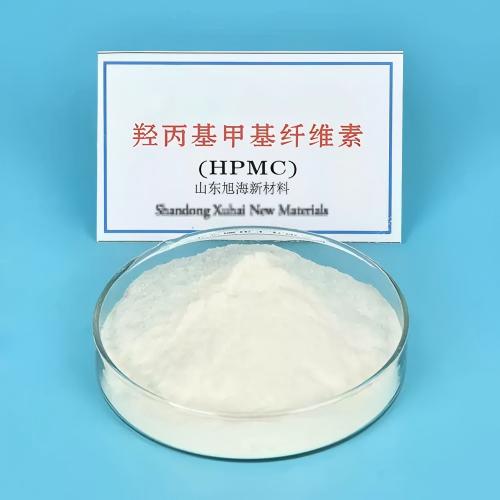
For professional HPMC and construction chemical solutions, follow Shandong Xuhai New Materials Technology Co., Ltd. to learn more about HPMC, cellulose ether, redispersible polymer powder, powder defoamer, PCE and other construction additives.
Shandong Xuhai New Materials Technology Co., Ltd.
For more product information and technical resources: